
Immunotherapy: Immunotherapy represents a groundbreaking shift in the treatment of cancer, harnessing the body’s own immune system to combat malignancies. Unlike traditional therapies such as chemotherapy and radiation that directly target cancer cells, immunotherapy works by enhancing the immune response, allowing the body to recognize and destroy cancer more effectively.
Here are some common types of immunotherapy:
- Checkpoint Inhibitors: These medicines take off the “brakes” on the immune system, letting it attack cancer more easily.
PD-L1 inhibitors are a class of drugs used in immunotherapy, specifically targeting the programmed death-ligand 1 (PD-L1) protein found on the surface of some cancer cells and immune cells.
Here’s how they work:
-
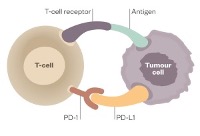
- Immune checkpoint: The interaction between PD-L1 on cancer cells and PD-1 (programmed death protein 1) on immune cells (T cells) normally acts as an “off switch” for the immune system, preventing it from attacking healthy cells.
- Cancer’s evasion strategy: Many cancer cells overexpress PD-L1, effectively “hiding” from the immune system by engaging the PD-1 “off switch” on T cells.
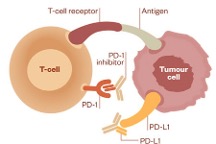
- PD-L1 inhibitors’ action: PD-L1 inhibitors are monoclonal antibodies designed to bind to PD-L1 on the cancer cells, blocking the interaction with PD-1.
- Releasing the brakes: By preventing this interaction, PD-L1 inhibitors essentially remove the “off signal”, allowing the T cells to become active and launch an immune response against the cancer cells
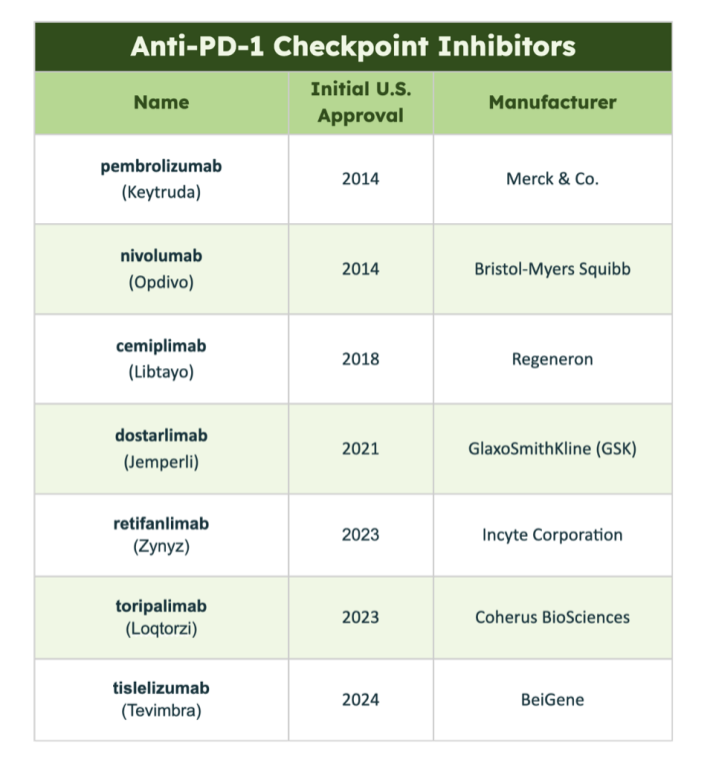
- For example, metastatic melanoma would have overall survival of 6-8 months with cytotoxic chemotherapy. With the combination of Nivoluma(PD-1 inhibitor) and ipilimumab(CTLA-4 inhibitor), overall survival is well beyond 5 years. This is unheard of in the pre-immunotherapy era.
- Monoclonal Antibodies: Man-made antibodies that bind to cancer cells, helping the immune system spot and attack them.
- Cancer Vaccines: Vaccines that teach the immune system to recognize and fight cancer.
- Adoptive Cell Therapy: Taking immune cells from a patient, changing or increasing them outside the body, then putting them back to help fight cancer.
- Cytokine Therapy: Using special proteins that tell the immune system to work harder against cancer.
The potential of immunotherapy is immense, with various types including checkpoint inhibitors, CAR T-cell therapy, and monoclonal antibodies showing promising results in clinical trials. Patients who previously faced limited options are now experiencing significant improvements in survival rates and quality of life.
Moreover, immunotherapy offers a personalized approach to treatment; it can be tailored based on individual tumor characteristics and patient health profiles. This adaptability not only maximizes efficacy but also minimizes side effects associated with conventional treatments. As research continues to evolve, we are witnessing remarkable advancements that could redefine how we approach cancer care.
The rise of immunotherapy marks a pivotal moment in oncology—one that offers hope for patients battling cancer and underscores the importance of continued investment in innovative treatments. Embracing this new frontier could lead us closer to conquering one of humanity’s most formidable adversaries.
Authored by:
Dr. Nidhun V. Ashok
MBBS (AIIMS-New Delhi), MD (AIIMS-New Delhi), DrNB, ECMO, MRCP (Medical Oncology)
Consultant Oncologist
