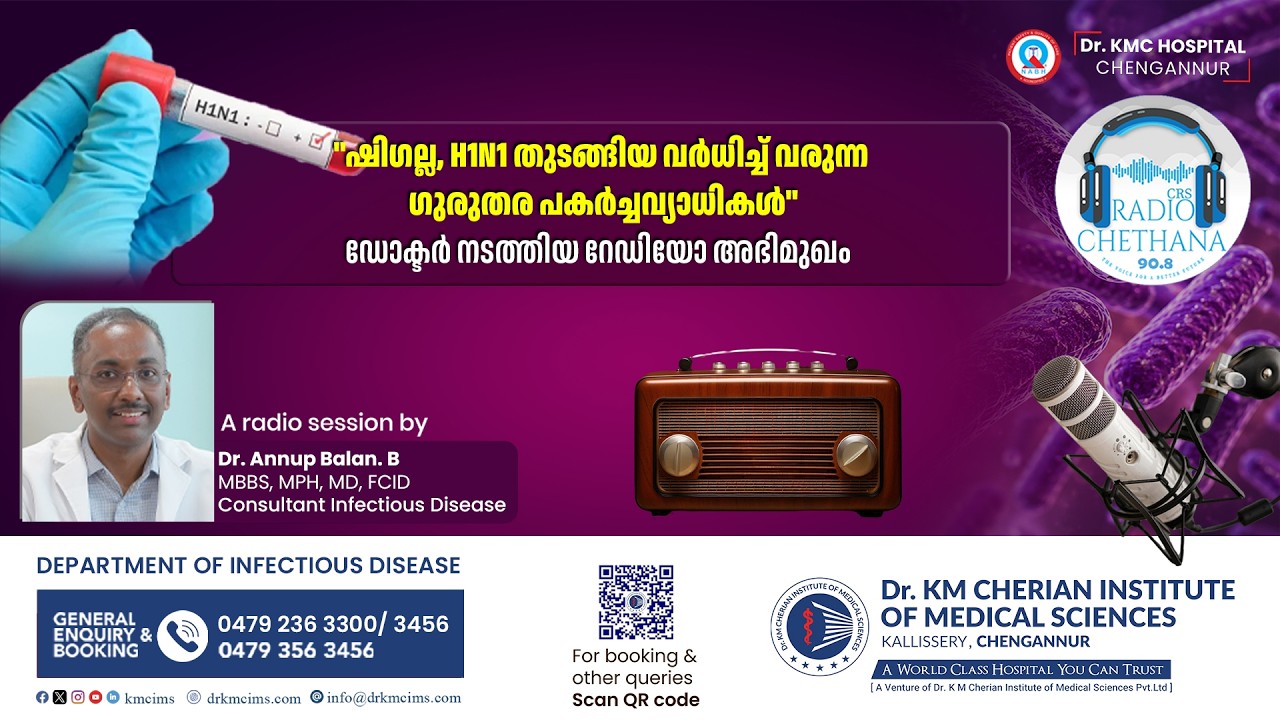
Dr. Annup Balan. B
Consultant Infectious Disease
The Department of Infectious Disease at Dr. KM Cherian Institute of Medical Sciences (Dr. KMC Hospital, Chengannur) offers thorough diagnosis, treatment, and management of infectious diseases in adults. Our experts handle both common infections and more complex cases, including recurrent, chronic, tropical, and drug-resistant infections that may need specialized assessment and multidisciplinary treatment.
Infectious diseases are illnesses caused by microorganisms like bacteria, viruses, fungi, and parasites. They can spread between people or via animals, insects, contaminated food or water, and environmental contact. Some microorganisms typically live harmlessly inside the human body but may cause disease when immunity is weakened.
One challenge in Infectious Disease Medicine is that infections can produce symptoms similar to those of many non-infectious conditions. Fever, fatigue, inflammation and abnormalities in laboratory investigations do not always immediately reveal the underlying cause. Infectious Disease specialists therefore combine detailed medical history, clinical examination, microbiological and laboratory investigations, imaging and other diagnostic findings to identify the cause and determine an appropriate treatment strategy.
At Dr. KMC Hospital, our approach focuses on accurate diagnosis, appropriate antimicrobial therapy, infection prevention, antimicrobial stewardship and continuous monitoring. Our specialists also work closely with other departments when infections occur alongside complex medical, surgical, oncological, or transplant conditions.
For consultation with our Infectious Disease specialists, contact us at (+91) 0479 236 3300 / (+91) 479 236 3456.
Many common infections can be successfully managed through routine medical care. However, recurrent, persistent, unusual or complicated infections may require specialist evaluation.
Our Infectious Disease specialists evaluate patients with a broad range of infections, including those where the source of infection is difficult to establish or where previous treatment has not produced the expected response.
Specialist Infectious Disease evaluation can be particularly valuable for patients experiencing recurrent infections, persistent or unexplained fever, complicated infections, or infections associated with underlying medical conditions.
The Department of Infectious Disease at Dr. KM Cherian Institute of Medical Sciences provides evaluation and management of COVID-19 and infectious complications associated with or occurring after COVID-19.
While most people recover from COVID-19 without serious infectious complications, some patients, particularly those who have required hospitalization, have underlying medical conditions, or have compromised immunity, may require specialist evaluation for persistent or new symptoms following the infection.
Our Infectious Disease specialists evaluate and manage conditions such as:
Patients who develop fever or other symptoms following recovery from COVID-19 need thorough assessment, as not all post-COVID symptoms are due to ongoing infection. Proper clinical evaluation and diagnostic tests are essential to identify if an infectious cause exists and to inform subsequent treatment decisions.
Antimicrobial resistance occurs when microorganisms develop resistance to medicines that were previously effective against them. This can make infections more difficult to treat and may require specialised antimicrobial selection based on clinical findings and laboratory testing.
Complex infections may include:
Our Infectious Disease specialists work with diagnostic and microbiology services to identify the responsible organism wherever possible and select appropriate antimicrobial treatment while considering factors such as drug resistance, interactions, and potential adverse effects.
Some infectious diseases require prolonged treatment and ongoing medical monitoring.
Chronic infections can affect a patient’s health over an extended period and may require regular assessment to monitor treatment response, complications and recurrence.
Our specialists provide evaluation and ongoing management for chronic infectious conditions, including HIV, tuberculosis, and selected bone and joint infections, based on each patient’s clinical needs.
Tropical infections remain particularly relevant in India and can also occur following domestic or international travel.
Patients with fever or other symptoms after travel may require evaluation based on where they traveled, potential exposures, activities undertaken and the timing of symptoms.
Our department provides specialized care for Tropical Infections, Travel-Related Infections and Travel Medicine, including assessment of unexplained fever and unusual infections associated with travel.
Pre-travel consultation can also help individuals understand potential infectious disease risks associated with their destination and determine appropriate preventive measures and vaccinations.
People with weakened immune systems can be more susceptible to severe, recurrent, or unusual infections. They may also develop opportunistic infections that are uncommon in people with normally functioning immune systems.
Patients who may require specialized Infectious Disease care include:
Because these patients can occasionally develop multiple or unusual infections, diagnosing and treating them may require close collaboration between Infectious Disease experts and the medical team managing the underlying condition.
At Dr. KMC Hospital, our Infectious Disease team collaborates with Oncology, Multi-Organ Transplant, and other relevant departments to provide coordinated care.
Infection prevention and management are important components of organ transplantation.
Patients undergoing transplantation require careful infection assessment because immunosuppressive medicines used to prevent organ rejection can increase susceptibility to bacterial, viral, fungal, and other infections.
Our Infectious Disease specialists support transplant care through evaluation, diagnosis and management of infectious complications before and after transplantation, working alongside Dr. KMC Hospital’s Multi-Organ Transplant team.
The Department provides comprehensive HIV Medicine, including clinical evaluation and ongoing management of people living with HIV.
Modern HIV care requires appropriate medical treatment and regular monitoring, as well as identification and management of opportunistic infections and other complications associated with compromised immunity.
Our approach combines evidence-based medical management with appropriate monitoring while maintaining patient confidentiality and dignity.
Certain infections during pregnancy require careful evaluation because some infectious diseases can affect both the mother and the developing baby.
Assessment may involve identifying the infectious organism, evaluating potential risks and determining appropriate treatment or preventive measures while considering pregnancy.
When required, Infectious Disease specialists can work with Obstetrics & Gynaecology and other relevant specialists to support multidisciplinary management of infections occurring during pregnancy.
Persistent or unexplained fever can sometimes be challenging to diagnose because infection is only one of several possible causes.
Rare infections, tropical diseases, unusual exposures and infections in immunocompromised patients can require detailed investigation and specialist interpretation of clinical and laboratory findings.
Infectious Disease specialists are trained to evaluate the patient’s history, pattern of illness, potential exposures, travel history, immune status and diagnostic results to help identify the underlying cause and guide further treatment.
Vaccination is not limited to childhood. Adults may need vaccination based on their age, medical conditions, occupation, vaccination history, travel plans, and individual risk factors.
Adult vaccination can be particularly important for people with chronic diseases, older adults, healthcare workers, travelers and patients whose medical conditions increase their vulnerability to particular infections.
Our specialists provide Adult Immunization assessment and vaccination guidance based on individual healthcare needs.
Different destinations may expose travelers to various infectious diseases. The necessary precautions vary based on factors such as the destination, trip length, planned activities, accommodation, and the traveler’s health status.
Our Travel Medicine services provide individualised advice on infectious disease prevention and appropriate Travel Vaccination.
Travelers returning with fever, diarrhea, rash, or other symptoms can be assessed for tropical and travel-associated infections.
Antimicrobial Stewardship promotes the responsible and evidence-based use of antibiotics and other antimicrobial medicines.
Using antimicrobials only when appropriate, selecting the correct medicine and optimizing treatment duration can help improve patient care while reducing unnecessary antimicrobial exposure and the development of drug resistance. This is especially crucial in a super-specialty hospital where critically ill, immunocompromised, surgical, oncology, and transplant patients might need complex antimicrobial therapies.
Patients from Chengannur, Alappuzha, Thiruvalla, Pathanamthitta, Kottayam, Idukki, Kollam and other parts of Central Travancore can access comprehensive Infectious Disease services at Dr. KMC Hospital.
The Department of Infectious Disease at Dr. KM Cherian Institute of Medical Sciences comprises specialists experienced in diagnosing and managing a broad spectrum of infectious diseases. Our doctors provide evidence-based evaluation and treatment for general and tropical infections, chronic and recurrent infections, drug-resistant infections, HIV, travel-related infections, and infections affecting immunocompromised and transplant patients. The department also works collaboratively with other specialties at Dr. KMC Hospital when infections occur alongside complex medical, surgical, oncological, or transplant conditions.
At Dr. KMC Hospital, Chengannur, our Infectious Disease services include:
Dr. KM Cherian Institute of Medical Sciences (KMC Hospital, Chengannur) is the best multispeciality hospital in Kerala, offering world-class healthcare services. Book a consultation today and begin your journey toward recovery, restoration and renewed self-assurance.